




Winter Road Maintenance Wear Parts: Where Carbide Delivers Value Across a Fleet
Most fleet conversions start with the wrong question: "Should we switch to carbide?" The question that produces a plan is: "Which positions should switch first?" A winter fleet wears cutting edges, moldboard protection, grader…
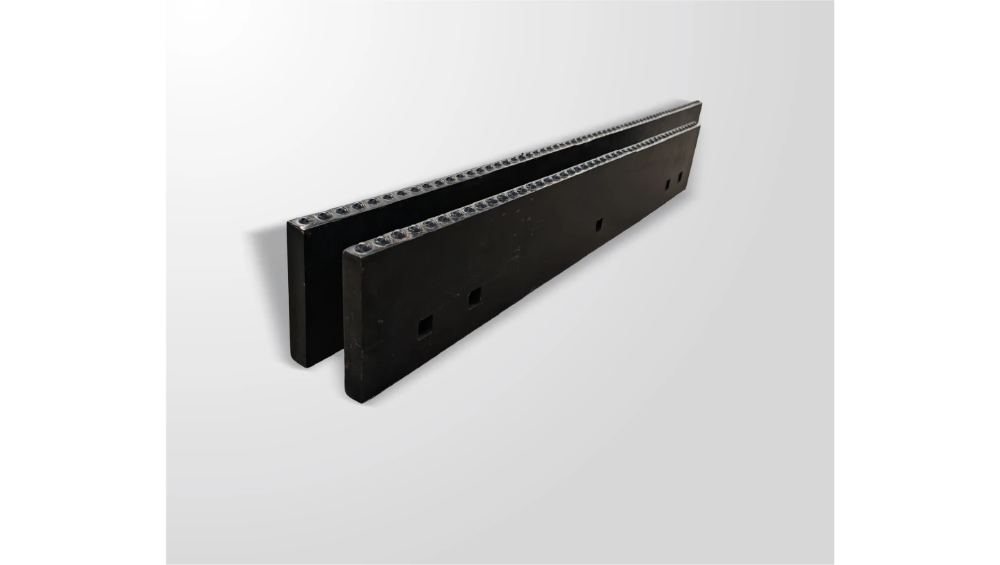
Most fleet conversions start with the wrong question: “Should we switch to carbide?” The question that produces a plan is: “Which positions should switch first?” A winter fleet wears cutting edges, moldboard protection, grader blades, bucket edges, and resurfacer components — and carbide does not pay for itself equally on all of them. This guide is the fleet-level map: which machine positions earn carbide, which should stay steel, what data to collect before converting, and where each topic is covered in depth.
The Winter Fleet Wear-Parts Map
| Machine / position | Wear part | Where carbide earns its cost | Deep dive |
|---|---|---|---|
| Truck plow | Cutting edge | High-mileage highway and ice routes | How to Choose a Snow Plow Cutting Edge |
| Motor grader | Cutting edge, moldboard protection | Gravel, ice, high utilization | Motor Grader Snow Blades |
| Underbody scraper | Cutting edge | Full-width highway scraping | Underbody Scraper Blade Wear |
| Wing plow | Cutting edge, wear tiles | Shoulders and high-speed highway duty | Wing Plow Cutting Edges |
| Loader | Bucket cutting edge | Snow and aggregate handling | Loader Cutting Edges |
| Ice resurfacer | Blade, tire studs | High-utilization rinks | Ice Resurfacer Blade Replacement |
The common thread is continuous abrasive sliding. Where a machine slides across grit, ice, or aggregate, carbide pays back. Where impact dominates and abrasion is light, carbide can chip out before earning its premium.
Which Positions Earn Carbide First
Utilization and abrasion decide the priority, not the part price. A typical conversion order for a mixed fleet:
- Highway truck plows — the most miles and the most abrasive ice contact
- Underbody scrapers — continuous full-width contact at speed
- Graders — gravel and ice duty with high down-force
- Wing plows — shoulder work that is brutal on edges
- Loaders — only if they run serious snow or aggregate hours
- Ice resurfacers — only at high-utilization facilities
Start with the position that costs the most in changeout labor and downtime per season, and convert that one first. The data from that conversion funds the next.
When Steel Remains the Better Choice
Carbide is not the answer everywhere. Four conditions argue for steel:
- Low utilization — if the part would not wear out in a season anyway
- Severe impact — rock, demolition, and buried-obstacle work destroys brittle inserts
- No tracking — if changeout data is not recorded, the premium cannot be measured
- Mounting problems — a worn or mismatched mount defeats any material
The lifespan guide has the cost-per-mile framework that settles the financial question; this page decides which positions deserve the analysis.
The Hardness vs Toughness Tradeoff in One Paragraph
Hardness resists abrasion; toughness resists impact — and they pull in opposite directions. A part that is too hard for its route chips; one that is too soft wears out early. Both look like premature failure. The correct grade is chosen by matching the duty, and the equipment guides linked above explain the tradeoff for each machine.
Data to Collect Before Changing Materials
Before converting any position, set up tracking. The fleet-level dashboard needs five numbers per asset group:
| Metric | What it measures | Decision trigger |
|---|---|---|
| Hours or miles per edge | Utilization | Compare only within the same route group |
| Changeouts per season | Wear life | The baseline for any material comparison |
| Downtime per changeout | Labor and storm risk | The hidden half of cost per mile |
| Dominant failure mode | Wear vs impact vs mounting | Tells you whether carbide fits at all |
| Cost per season per asset | The bottom line | The number that funds the conversion |
Two seasons of this data turn the carbide decision from an argument into a calculation.
Running a Phased Fleet Trial
Convert one position at a time, on one route group, with the same truck, operator, and settings:
- Record the steel baseline for a season on that route group
- Install carbide on the same assets and track the same metrics
- Compare cost per hour and downtime, not impressions
- Keep the trial running two seasons before standardizing
A phased trial contains the risk: if the first position does not pay back, the fleet has lost one experiment, not a season of purchasing.
Where to Go Next
- Motor Grader Snow Blades — grader edge selection and wear diagnosis
- Underbody Scraper Blade Wear — full-width scraping problems and setup
- Truck vs Pickup Snow Plow Cutting Edges — light-duty equipment decisions
- Ice Rink Equipment Maintenance Checklist — resurfacer maintenance planning
- Custom Carbide Wear Parts RFQ Checklist — preparing a drawing-based quote
- How to Qualify a Carbide Manufacturer in Thailand — supplier qualification across borders
When you are ready to spec parts across the fleet, assemble the drawing bank first, then run the phased trial. SENTHAI’s engineering team can review a fleet parts list and recommend where carbide earns its cost first — the recommendation should be based on your utilization data, not on selling every position.
FAQ
Which fleet assets should be tracked together?
Group assets by route group and duty, not by model. Two trucks on different routes produce incomparable wear data; tracking them separately is the only way to learn anything.
How do you standardize wear-part inventory across different machine models?
Standardize by part family and a drawing bank: cutting edges, wear tiles, inserts, and hardware each get a spec file per machine. The goal is interchangeable spares within a route group, not one part for every machine.
Which metrics should a fleet track before converting to carbide?
Hours or miles per edge, changeouts per season, downtime per changeout, dominant failure mode, and cost per season. Without these, the carbide premium cannot be measured.
How should a fleet run a phased carbide trial?
One position, one route group, identical assets and settings, a recorded steel baseline, and two seasons of data. Expand only after the first position shows a measurable saving.
Related
- Motor Grader Snow Blades — grader-specific edge selection
- Underbody Scraper Blade Wear — underbody wear and setup diagnosis
- Carbide Snow Plow Blade — carbide edges for plow fleets
- Carbide Inserts — insert shapes and grades for wear parts
Sources
Related articles
 Plow Skid Shoes vs Plow Feet: What They Do and How to Set ThemCore TopicsWhat Is a Packed Ice Carbide Kit? The I.C.E. Blade System ExplainedCore TopicsCost-per-Mile for Plow Blades: A KPI Buyers Can Actually UseCore Topics
 Why Carbide Blades Crack in Deep Cold: Stress Relief, Brazing, and HandlingCore Topics