Snow Plow Carbide Inserts: Selection, Specs, and Replacement
An order that specifies "carbide inserts" without grade, grain, shape, or retention cannot be manufactured correctly — the supplier will choose, and the choice will be made without your route data. The insert is…
An order that specifies “carbide inserts” without grade, grain, shape, or retention cannot be manufactured correctly — the supplier will choose, and the choice will be made without your route data. The insert is where a snow plow blade’s wear life lives: the steel carrier holds the shape, and the inserts do the cutting. This page covers the insert-level specifications, how retention is designed, and how to inspect and replace inserts without rebuilding the blade.
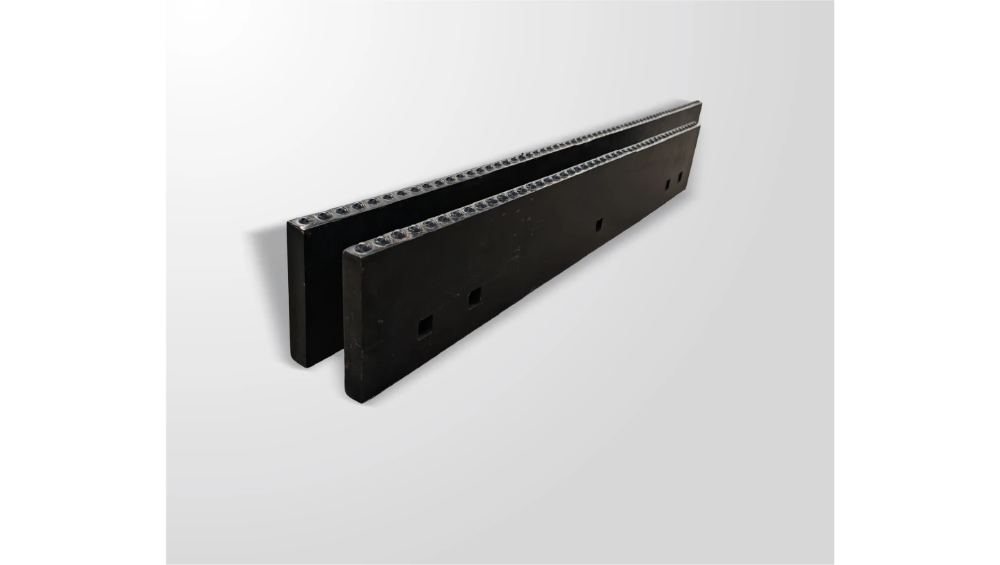
What a Carbide Insert Is in a Plow Edge
An insert is a tungsten carbide element bonded into a steel carrier — brazed, mechanically retained, or both. Tungsten carbide is a sintered composite of carbide grains and a metallic binder, usually cobalt. The grade is defined by grain size and binder content, and those two variables set the balance between hardness and toughness.
That balance is the whole selection problem: more binder and finer grains improve toughness but reduce wear resistance; less binder and coarser grains increase hardness but chip easier. The right grade for a gravel-shoulder route can be the wrong one for a jointed bridge deck, so the spec has to start from the duty, not from a ranking of grades.
The Specs That Matter
| Specification | What it controls | What to verify |
|---|---|---|
| Carbide grade | Hardness vs toughness balance | Matched to your surface and impact load |
| Grain size | Wear and chipping behavior | Fine for abrasion, coarse for impact |
| Binder content | Toughness and corrosion | Cobalt content documented |
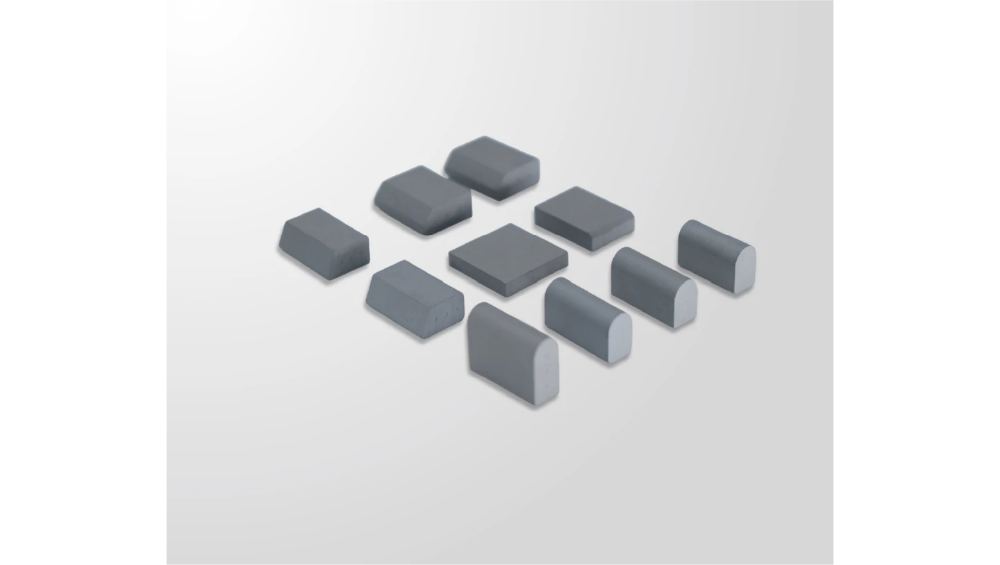
| Insert shape | Cut geometry and retention | Trapezoid, bullnose, or custom profile |
| Insert density | Cutting surface per edge | More inserts, more cut — and more retention points |
| Retention method | Brazed vs mechanical | Matched to impact exposure |
Ask the manufacturer to confirm each field against your route data. A spec sheet that names a grade without grain and binder information is incomplete.
Selecting Inserts for Your Routes
The material logic of the carbide vs steel framework applies at the insert level: abrasive routes favor harder grades with denser coverage, impact-heavy routes favor tougher grades and reinforced retention. On jointed concrete or bridge decks, consider segmented or isolated-insert designs — the ice scraper guide covers those options. Route-based selection beyond that is the job of the selection hub; this page stays insert-specific.
Retention: Brazed vs Mechanically Locked
| Retention method | Strengths | Risks | Best fit |
|---|---|---|---|
| Brazed | Low profile, simple, strong bond | Bond failure if brazing quality varies | Consistent edges, lower impact |
| Mechanically locked | Field-replaceable, survives impact better | More components, loosening risk | Impact-heavy routes, replaceable inserts |
The choice changes replacement economics and failure behavior. A brazed insert that fails means rebrazing or a new edge; a mechanical insert can be replaced in the field. Match the retention to your maintenance capability and impact exposure.
Insert Inspection Checklist
| Check | What to look for | Action |
|---|---|---|
| Seating | Insert flush, no rocking | Loose seat → replace or re-fix |
| Cracks | Hairline cracks around the seat | Cracked → replace before pop-out |
| Height | Remaining insert height vs new | Low → plan replacement |
| Neighboring inserts | Uneven wear between inserts | Mixed wear → replace the set |
| Retention hardware | Loose or missing locks | Tighten or replace hardware |
The checklist is fast and catches failures before they become road events. Run it at the same cadence as the wear diagnosis guide recommends for edge inspection.
Insert Failure and Replacement
Inserts fail in three ways, and each points to a different fix:
- Chipping — impact exposure exceeds the grade’s toughness; move tougher or adjust angle
- Pop-out — retention failure or excessive pressure; verify the braze/mechanical lock and down-pressure
- Wear-through — the insert has done its job; replace the insert or the edge per the wear pattern
Replacement is a spec discipline: match the grade and shape to the remaining inserts or replace the set. Mixing a new harder insert into a worn edge creates uneven wear. The wear diagnosis guide has the symptom-to-action table.
Working With a Manufacturer
Inserts are custom parts in practice: shapes, sizes, and densities vary with the edge design. Send the edge drawing, the old inserts, and the failure history to the manufacturer, and agree inspection criteria — including first-article approval — before production. The custom wear parts RFQ checklist covers the drawing and acceptance fields. SENTHAI produces carbide inserts and edge systems at its factory in Rayong, Thailand, and matches grade and geometry to customer drawings and duty descriptions.
FAQ
Do I need to know the carbide grade to order inserts?
No — describe the failure history and duty, and let the manufacturer recommend a grade. What you should know is the insert shape, size, density, and how the edge is mounted.
Can inserts be replaced individually?
Sometimes. Individual insert replacement is possible where retention allows, but mixing grades or wear levels creates uneven performance. For high-utilization edges, replace the set or the full edge.
Why do inserts pop out on some routes but not others?
Pop-out is driven by impact, pressure, and angle — not just retention quality. Verify the mount and operating settings before blaming the bonding.
Related
- Custom Carbide Wear Parts RFQ Checklist — preparing the technical request
- Carbide Inserts — insert shapes and sizes
- Carbide vs Steel Snow Plow Blades — the material decision
- Winter Road Maintenance Wear Parts — the fleet-level parts map