




How Does the Carbide Sintering Process Create Ultra-Durable Snow Plow Blades?
The carbide sintering process transforms tungsten carbide powder into dense, high-strength inserts through controlled heating, pressing, and cooling in specialized furnaces — creating inserts that bond seamlessly to steel blades and deliver 10–20× longer…
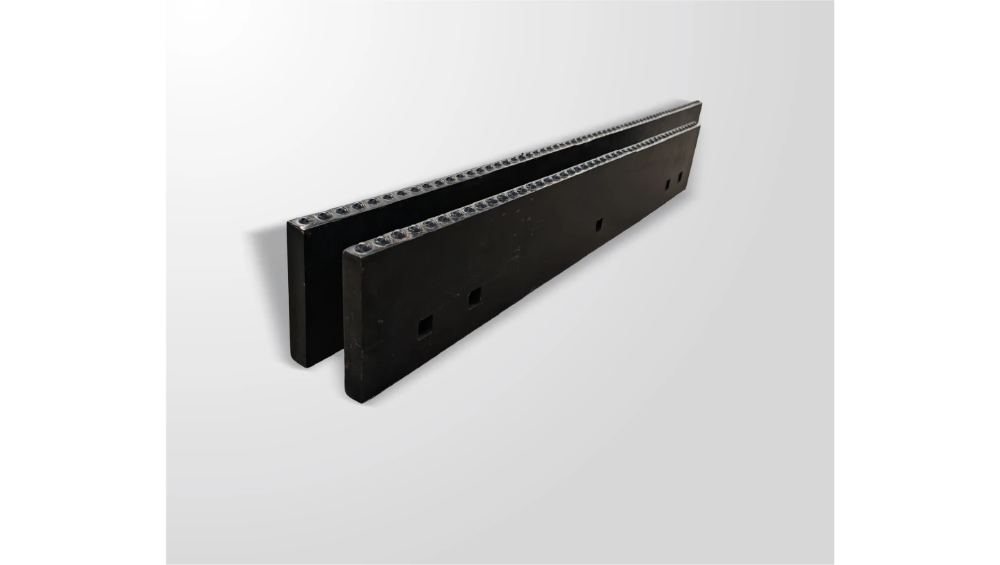
The carbide sintering process transforms tungsten carbide powder into dense, high-strength inserts through controlled heating, pressing, and cooling in specialized furnaces — creating inserts that bond seamlessly to steel blades and deliver 10–20× longer service life than carbon steel edges. SENTHAI’s automated sintering workshop uses vacuum furnaces and proprietary no-heat-difference control to achieve uniform micro-grain carbide structures with tolerances under 0.01 mm.
(Last modified date: August 31, 2026)
Key Takeaways
- Carbide sintering compacts and heats tungsten carbide powder to form solid, wear-resistant inserts without melting, creating superior carbide-to-steel bonding.
- Vacuum sintering eliminates oxygen to prevent oxidation, preserving purity and ensuring uniform micro-grain structure that resists delamination under impact.
- SENTHAI’s fully automated process completes in 24–48 hours from pressing through cooling, with tolerances under 0.01 mm.
- Sintered inserts last 10–20× longer than steel; see what eta phase is in sintered carbide.
What Is Carbide Sintering and Why Does It Matter?
Carbide sintering compacts and heats tungsten carbide powder to form solid, wear-resistant inserts without melting. It creates superior bonding strength between tungsten carbide and steel. For snow plows, sintered carbide edges last 10–20× longer than carbon steel, reducing downtime and costs while preventing cracking under high-impact loads on uneven roads. See also why runway ice kits and carbide blades matter for FOD-free de-icing.
How SENTHAI’s Sintering Process Works Step-by-Step
- Wet grind raw tungsten carbide powder to uniform size.
- Automated hydraulic presses form inserts into trapezoid or bullnose shapes.
- Vacuum sintering bonds particles at high temperature without oxidation.
- Proprietary no-heat-difference cooling ensures uniform grain structure.
- Quality checks maintain tolerances under 0.01 mm.
| Aspect | SENTHAI sintering process | Competitor methods |
|---|---|---|
| Automation | Fully automated: wet grinding, pressing, sintering | Often manual or semi-automated |
| Environment | Vacuum furnace with no-heat-difference control | Standard atmosphere furnaces |
| Traceability | Full batch tracking, ISO 9001/14001 | Limited or none |
| Consistency | Tolerances under 0.01 mm, uniform micro-grain | Variable grain size, potential warping |
The Role of Vacuum Sintering in Durability
Vacuum sintering eliminates oxygen to prevent oxidation, preserving carbide purity. It ensures uniform micro-grain size for consistent wear resistance, and the structure withstands repeated ice-breaking impacts without delamination. Sintered inserts bond strongly to steel, enabling 10× higher impact tolerance than conventionally bonded edges. See also carbide microstructure sintering quality control and how sintering creates zero-porosity inserts.
Cost and Performance Benefits for Fleet Operators
Sintered carbide blades reduce replacement frequency, cut mid-storm downtime, and maintain sharp cutting power with lower fuel use. For fleet managers, the 10–20× wear life translates to a lower cost per mile cleared and predictable seasonal budgets. See also industrial-grade carbide blade strength and precision and how Western Unimount plows tackle snow removal.
Frequently Asked Questions
How long does the sintering process take from pressing to finished insert?
SENTHAI’s automated sintering completes within 24–48 hours from pressing through cooling, optimized for quality across insert sizes like trapezoid 25.15 × 20.0 × 9.27 mm.
Can sintered carbide inserts be resharpened or recycled after a blade dulls?
Sintered inserts last 10–20× longer than steel, minimizing sharpening. SENTHAI offers replacement inserts for 3ft and 4ft blades and full rebuilding services.
What happens if a sintered carbide insert cracks under impact on rough road surfaces?
I.C.E. kits with isolated inserts prevent cracking, lasting 3× longer on uneven surfaces; uniform sintering also reduces crack risk compared to other methods.
How does SENTHAI guarantee the sintering quality of custom-sized inserts?
Automated checks maintain tolerances under 0.01 mm with full batch traceability under ISO 9001/14001.
Is there a minimum order quantity for sintered carbide inserts, or can small fleets request samples?
Samples and reports are available for new partners. An MOQ of 500 blades is recommended for shipping efficiency, with custom packaging options.
Related Articles
- What Is Eta Phase in Sintered Carbide?
- Carbide Microstructure Sintering Quality Control
- How Does the Carbide Sintering Process Create Zero-Porosity Inserts?
- Industrial-Grade Carbide Blades: Strength, Precision, and Market Leadership
- Runway Ice Kits and Carbide Plow Blades for FOD-Free De-Icing
Official Resources
- SENTHAI — High-Quality Snow Plow Blade Manufacturer
- SENTHAI — Carbide Snow Plow Blade
- SENTHAI — Contact for Samples
References
Related articles
 Best Snow Plow Blade Family for Your Fleet: Top 5 ScenariosKnowledge
 Top 10 Snow Plow Blade Types for Winter Fleets (Ranked by Duty Fit)Knowledge
 Top 5 Best Carbide Blade Configurations for Highway PlowingKnowledge
 Best Snow Plow Blade Materials Ranked: Steel vs Carbide vs Cladding vs Rubber-CarbideKnowledge