




Why Insert Quality Varies Between Suppliers, and How to Spot the Difference
Cheap inserts are rarely cheap. The price difference between two suppliers' inserts is often the difference between controlled production and guesswork, and the savings at purchase show up as jams, weak bonds, and premature…
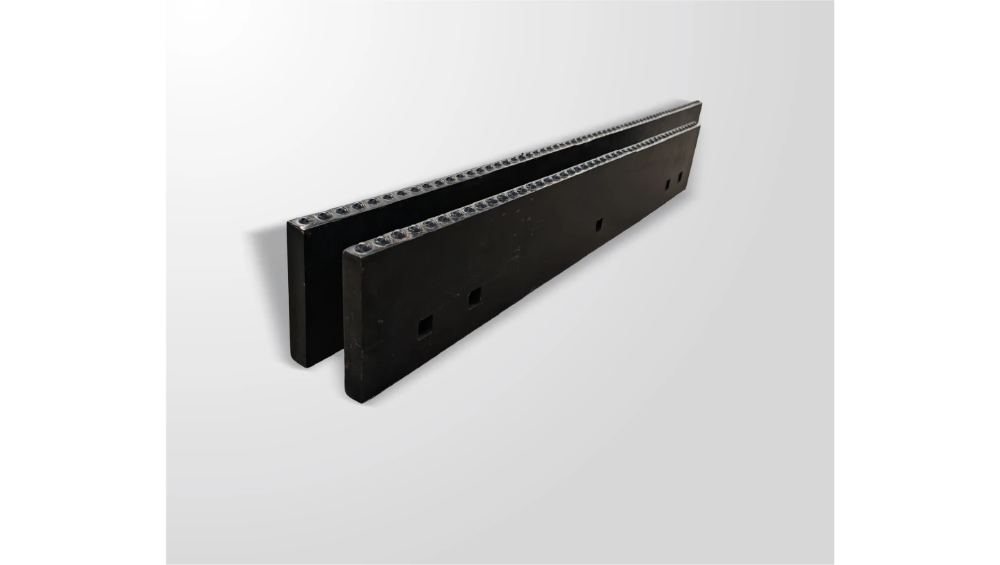
Cheap inserts are rarely cheap. The price difference between two suppliers’ inserts is often the difference between controlled production and guesswork, and the savings at purchase show up as jams, weak bonds, and premature wear on the line and the road. Spotting the quality difference before the order is the buyer’s real saving, and the evidence starts with the carbide inserts page as the reference for what a controlled product looks like.
This article explains where insert quality differences originate, the red flags to look for, the tests and records that separate suppliers, and how to cost the risk.
Cheap inserts are rarely cheap
The insert price is the smallest part of the insert’s cost. The line that jams, the blade that loses an insert, and the route that underperforms all cost more than the price difference, and the cheap insert pays for the difference in failures.
The price gap has a reason: quality costs process control. The controlled sintering, the inspection, and the batch records all add cost, and the supplier who skips them can quote lower. The buyer who compares only price is comparing the invoice, not the cost.
The comparison should be on the full profile: the material, the process, the records, and the field performance. The price is the last number to compare, not the first.
Where do quality differences originate?
The differences start in the material and the process:
| Source | How it affects quality |
|---|---|
| Raw material | Virgin micro-grain carbide vs recycled or uncontrolled feedstock |
| Powder preparation | Mixing and granulation decide the uniformity |
| Pressing | Compaction density affects the dimensions and the porosity |
| Sintering | Temperature uniformity and atmosphere decide the grain and the hardness |
| Finishing | Grinding and surface preparation decide the dimensions and the brazing surface |
| Inspection | Sampling and measurement decide what ships |
SENTHAI describes its inserts as made from 100% virgin micro-grain tungsten carbide with compression molding and vacuum sintering and monitored hardness and grain. The description is the controlled end of the range; the buyer’s job is to place each supplier on it.
What visual and dimensional red flags matter?
The red flags are checkable at the dock:
- Dimensional variation: inserts that vary visibly across the lot, or that measure outside the window;
- Edge defects: burrs, chips, and rough edges that the caliper does not catch;
- Surface inconsistency: a brazing surface that is dirty, inconsistent, or unprepared;
- Shape distortion: the trapezoid or bullnose profiles that do not match the drawing;
- Packaging and labeling gaps: missing batch numbers and records;
- A “too good” price: a price far below the controlled suppliers is a warning, not a bargain.
Each red flag is a finding, and the findings are the evidence for the supplier file.
The findings should be recorded with the lot and the date, so the pattern across shipments is visible. One lot with a red flag is a finding; three lots with the same flag is a supplier pattern, and the pattern is what the sourcing decision uses.
The same record protects the buyer’s own line: a lot that passed with a minor flag and later failed on the line is traceable through the record, and the trace is the difference between a process question and a blame dispute.
How many lots should I sample before judging a supplier? Enough to see the pattern: three to five lots across a period, with the measurements and the flags recorded. The pattern, not the single lot, is the evidence.
Tests and records that separate suppliers
The separation is the evidence:
- Dimensional inspection: the measurements against the tolerance window, across the lot;
- Material records: the grade, the grain, and the hardness values on the certificate;
- Batch records: the process parameters and the inspection results per lot;
- Consistency across lots: the comparison that shows whether the control holds;
- Pilot testing: the insert run through the buyer’s line or field, with the acceptance criteria;
- Field performance: the insert’s wear and the failure pattern on the actual duty.
SENTHAI states that its inserts can hold tolerances within ±0.02 mm and that required reports are confirmed during quotation, which is the evidence model the buyer should ask every supplier to meet.
The evidence should also cover the process audit: the supplier’s sintering control, the calibration of the measurement tools, and the corrective-action history. The audit findings, added to the records, give the buyer the process picture that the papers alone cannot.
The same audit should be repeated on a schedule, because processes drift and suppliers change. The buyer who re-audits the critical suppliers each season keeps the evidence current, and the current evidence is the sourcing decision’s basis.
The sourcing decision, made on the evidence, is the supply chain’s quality foundation, and the foundation is what the line and the field rely on. The evidence, kept in the supplier file, is the record that survives the staff changes and the seasons.
The record, updated with each lot and each audit, is the supplier’s quality history, and the history is the comparison the next sourcing decision uses.
The comparison, honest and evidence-based, is the difference between buying inserts and buying insert reliability, and the reliability is the line’s and the field’s quiet assurance.
The assurance, earned lot after lot, is the supply chain’s quality, and the quality is the buyer’s own record.
The record, kept with the lots, is the sourcing decision’s memory, and the memory is the buyer’s next comparison’s start.
The start, honest and current, is the supplier file’s strength, and the strength is the supply chain’s quality.
The quality, verified lot after lot, is the buyer’s own assurance, and the assurance is the line’s and the field’s trust.
How do I audit an insert supplier’s process? Review the sintering control, the calibration records, and the corrective-action history, and verify the batch records against the physical parts. The audit, with the records, is the process picture.
Costing the risk of bad inserts
The risk has a cost, and the cost belongs in the comparison:
- The line stops and the rework from the jams;
- The weak bonds and the insert losses in the field;
- The premature wear that shortens the blade’s life;
- The warranty and the claim costs;
- The customer relationship damaged by the failures.
The risk cost is the difference between the cheap price and the real cost, and the buyer who estimates it makes the honest comparison. The controlled supplier’s price includes the process; the cheap price does not, and the difference is paid later.
The risk estimate should be written into the supplier comparison, with a line per risk: the jam cost, the rework cost, the field failure cost, and the relationship cost. The table that shows the total, not the price, is the comparison the decision uses.
The same table feeds the negotiation: the buyer who knows the risk cost can pay more for the controlled supplier and still save, and the supplier who knows the buyer’s analysis can justify the price. The evidence is the negotiation’s language.
What is the risk cost of a bad insert lot? The line stops, the rework, the field failures, the warranty, and the relationship cost, summed per lot. The estimate belongs in the supplier comparison beside the price.
Compare suppliers on evidence
The supplier comparison is an evidence exercise: the material records, the batch data, the tolerances, the pilot results, and the field performance. The material evidence reference is SENTHAI’s reference, and the contact page is where the evidence and the pilot terms are requested.
Send the application, the acceptance criteria, and the line requirements through the contact page and ask for the batch records and the pilot terms. The supplier who provides the evidence earns the order; the one who offers only a price earns a risk.
Expert view — SENTHAI engineering team: “Cheap inserts are rarely cheap. The process control is the price the buyer pays either way.”
Frequently Asked Questions
Why are cheap inserts risky? The price difference is often the process control, and the savings at purchase show up as jams, weak bonds, and premature wear that cost more than the difference.
Where do quality differences originate? In the raw material, powder preparation, pressing, sintering, finishing, and inspection. The controlled process is the quality.
What red flags should I check? Dimensional variation, edge defects, surface inconsistency, shape distortion, missing records, and a price that is too good.
What evidence separates suppliers? The dimensional inspection, the material and batch records, the consistency across lots, the pilot testing, and the field performance.
How do I cost the risk? Estimate the line stops, the rework, the field failures, the warranty, and the relationship cost. The risk is the difference between the price and the real cost.
Does SENTHAI provide the evidence? SENTHAI states its inserts can hold ±0.02 mm tolerances and confirms required reports per order, which is the evidence model to ask every supplier to meet.
How do I compare suppliers fairly? On the full profile: material, process, records, pilot results, and field performance, with the price compared last.
Sources
Related articles
 Best Snow Plow Blade Family for Your Fleet: Top 5 ScenariosKnowledge
 Top 10 Snow Plow Blade Types for Winter Fleets (Ranked by Duty Fit)Knowledge
 Top 5 Best Carbide Blade Configurations for Highway PlowingKnowledge
 Best Snow Plow Blade Materials Ranked: Steel vs Carbide vs Cladding vs Rubber-CarbideKnowledge