




What Are Grader Blades and How Do They Enhance Road Maintenance Efficiency?
Grader blades are the cutting, leveling, and shaping components mounted on motor graders — and carbide-reinforced versions can deliver up to four times the wear life of plain steel while keeping road maintenance crews…

Grader blades are the cutting, leveling, and shaping components mounted on motor graders — and carbide-reinforced versions can deliver up to four times the wear life of plain steel while keeping road maintenance crews ahead of schedule. They cut, level, and shape road surfaces, runways, and earthworks in abrasive conditions.
(Last modified date: August 31, 2026)
Key Takeaways
- Grader blades handle ditching, fine grading, and scarifying; reversible designs double lifespan.
- Material choice ranges from C-1084 steel to boron alloys and carbide overlays rated up to 4x steel wear life.
- Match thickness (3/8”–1/2”) and width (6–10”) to your machine and duty cycle.
- Through-hardening to 44–52 Rc plus carbide tips balances breakage resistance with abrasion resistance.
What Does a Grader Blade Do?
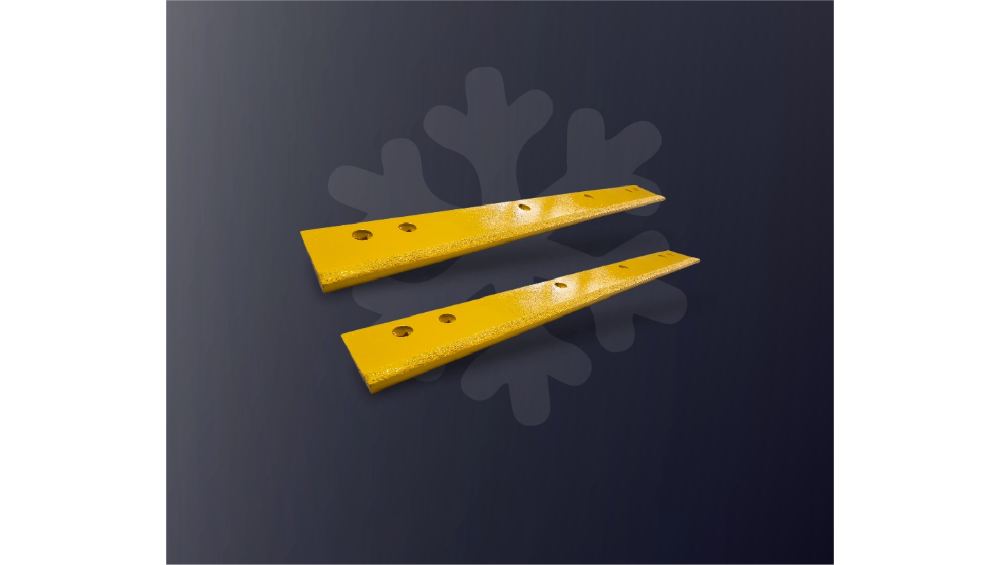
Grader blades cut, shape, and level surfaces during grading operations, moving soil, gravel, and other materials to create smooth, even grades. Reversible designs double lifespan by exposing a fresh edge. SENTHAI produces curved and flat profiles to suit different tasks, ensuring optimal penetration and material flow. Key functions include ditching and sloping to form drainage channels, fine grading for paving or finishing, and scarifying to break compacted soil when fitted with teeth. See data-driven grader blade selection and advanced plow bolts in road maintenance.
| Grader Blade Type | Primary Use | SENTHAI Features |
|---|---|---|
| Curved double-bevel | General road grading | Boron steel with carbide tips for 4x wear life |
| Flat double-bevel | Heavy-duty ripping | Through-hardened to 52 Rc, reversible |
| Serrated edge | Tough soil penetration | Custom OEM widths up to 10” |
How to Choose the Right Grader Blade?
Selection depends on soil type, machine model, and duty cycle. Thickness (3/8” to 1/2”) and width (6–10”) must match equipment specifications. Carbide-enhanced blades are recommended for abrasive conditions. Consider material (high-carbon steel for light use; boron alloy with carbide for heavy duty), profile (curved for rolling cuts, flat for straight cuts), and punching (center or edge holes for secure mounting). SENTHAI provides JOMA-style and custom designs on fully automated lines. See why custom JOMA-style blades suit commercial snow removal.
What Materials Are Used in Grader Blades?
Grader blades are made from high-carbon steel, boron alloys, and carbide tips. Through-hardening achieves 44–52 Rc, and carbide overlays provide up to four times the wear life of plain steel. Common materials include C-1084 steel for cost-effective general grading, Viper boron steel for breakage resistance, and carbide overlays for maximum abrasion resistance. SENTHAI manages full production in Thailand with ISO 9001-certified processes.
Why Are Carbide Grader Blades Superior?
Carbide-tipped blades keep a sharp cutting edge on abrasive gravel and ice, reducing passes and fuel burn. They cut downtime by extending changeout intervals and protect the moldboard from wear-through. On mixed routes, carbide blades deliver the best cost per mile — the same logic as snow plow edges. See whether the March 2026 tungsten surge raises carbide costs for budget planning.
How to Maintain Grader Blades Effectively?
- Inspect edge wear after each shift; rotate or reverse the blade at 50% wear.
- Check bolt torque and replace worn mounting hardware.
- Match feed rate and speed to material to avoid heat and shock damage.
- Store blades off the ground off-season to prevent corrosion.
Proper maintenance prolongs blade life — see how wing blades redefine efficiency and durability.
What Innovations Improve Grader Blade Performance?
Carbide overlays, segmented inserts, and reversible geometries extend life and simplify replacement. Automated brazing and sintering improve bond consistency, while data-driven selection matches grade, geometry, and hardness to route conditions. See how road repairs can be more efficient and durable.
Where to Source Reliable Grader Blades Wholesale?
SENTHAI serves 80+ global partners with custom widths, carbide grades, and OEM packaging, backed by ISO-certified production and batch traceability. Buyers should verify hardness certifications, carbide source, and lead times before ordering. See making graded road maintenance more cost-effective.
Frequently Asked Questions
What sizes do grader blades come in?
Common widths range from 6–10 inches with 3/8”–1/2” thickness; SENTHAI also makes custom OEM widths.
Can grader blades fit multiple machines?
Fit depends on bolt pattern and moldboard curve; verify compatibility or order custom punching.
How often should grader blades be replaced?
Steel blades may need replacement every season under heavy use; carbide-tipped blades typically last multiple times longer.
Do SENTHAI blades perform in snow and ice?
Yes — carbide-tipped grader blades handle snow and ice duty in addition to dirt and gravel grading.
Related Articles
- Data-Driven Grader Blade Selection
- Wing Blades in Road Maintenance
- Efficient Graded Road Maintenance
- March 2026 Tungsten Price Surge
Official Resources
- SENTHAI — Carbide Snow Plow Blades
- SENTHAI — Replaceable Carbide Inserts
- SENTHAI — Contact for Grader Blade Sizing
References
- SENTHAI grader blade product specifications and ISO 9001 documentation.
- Industry data on carbide-overlay wear life in road maintenance, 2025–2026.
Related articles
 Best Snow Plow Blade Family for Your Fleet: Top 5 ScenariosKnowledge
 Top 10 Snow Plow Blade Types for Winter Fleets (Ranked by Duty Fit)Knowledge
 Top 5 Best Carbide Blade Configurations for Highway PlowingKnowledge
 Best Snow Plow Blade Materials Ranked: Steel vs Carbide vs Cladding vs Rubber-CarbideKnowledge