




Seasonal Supply Planning for Carbide Inserts: Stock Before the Snow Season
Winter demand for carbide inserts is predictable, and that is exactly what makes it dangerous. Every assembly line and every replacement program needs inserts at the same time, the factories fill up at the…
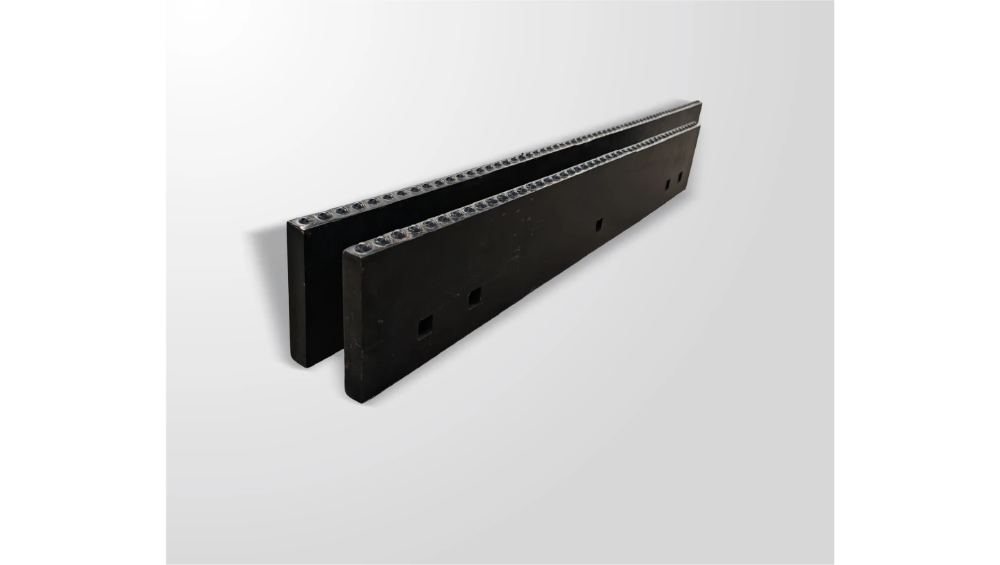
Winter demand for carbide inserts is predictable, and that is exactly what makes it dangerous. Every assembly line and every replacement program needs inserts at the same time, the factories fill up at the same moment, and the buyer who ordered in November discovers in January that the lead time was real. The solution is not a miracle supplier; it is a seasonal supply plan, and SENTHAI’s insert range is the product the plan is built around.
The plan has two owners. The supplier owns the capacity and the lead-time commitments; the buyer owns the forecast and the order timing. A plan where either side relies on the other to guess is not a plan, and the buyer who sends the forecast and the delivery windows to the supplier early is the one who gets the capacity when the season peaks.
The plan has two owners. The supplier owns the capacity and the lead-time commitments; the buyer owns the forecast and the order timing. A plan where either side relies on the other to guess is not a plan, and the buyer who sends the forecast and the delivery windows to the supplier early is the one who gets the capacity when the season peaks.
This article covers supply planning for carbide inserts: how to forecast demand, the stocking calendar, how much safety stock is enough, and how to work with suppliers on lead times.
Winter demand spikes are predictable
The spike is not a surprise; it is the calendar. Blade assembly programs ramp up before the snow season, replacement programs draw down stock as changeouts climb, and the same demand curve repeats every year with the same timing.
The predictability is the opportunity. A demand curve that repeats can be forecast, and a forecast can be stocked against. The buyer who treats winter demand as an event, ordering at the first signal, joins the queue at its worst point; the buyer who treats it as a season, ordering against the forecast, is already stocked when the queue forms.
SENTHAI describes its production framework and partner safety-stock buffers as designed for the North American snow season, with logistics planned to provide shortened lead times before peak demand. The supplier side of the plan exists; the buyer’s side is the forecast and the order timing.
How do you forecast insert demand?
The forecast starts with the consumption history, and the method is the same at any scale:
- Record insert consumption per month for the last one to three seasons;
- Identify the seasonal pattern: the ramp, the peak, and the drawdown;
- Adjust for the coming season’s known changes: new contracts, new equipment, new routes;
- Convert the consumption into order quantities by insert type.
The forecast should be per insert type, not a single total, because the sizes and shapes are not interchangeable. A forecast that says “we need 20,000 inserts” hides the risk that the line runs out of one shape while the warehouse holds another.
The forecast’s accuracy improves with the history: one season of records is a start, three seasons is a curve. The buyer who starts recording now builds the forecast that the next seasons will use.
A stocking calendar for the insert season
The stocking calendar turns the forecast into order dates:
- Spring: review the season’s consumption and set the forecast;
- Summer: place the main seasonal order, with the lead time confirmed;
- Early fall: receive the main order and run the incoming inspection;
- Late fall: place the top-up order for the forecast’s second half;
- Winter: monitor consumption against the forecast and trigger the emergency buffer only on the plan.
The calendar’s anchor is the lead time: every order date is the need date minus the confirmed lead time minus a buffer. A supplier that confirms an eight-week lead time and the season starts in ten weeks leaves no room for a customs delay, so the buffer has to be inside the plan, not added after the fact.
How much safety stock is enough?
Safety stock is the buffer between the forecast and reality, and the right amount balances two risks:
- Too little: a stockout stops the line or the changeout program at the worst moment;
- Too much: capital sits in the warehouse and the stock ages.
The sizing rule of thumb: safety stock covers the forecast uncertainty plus the lead-time variability. If the forecast is usually within 10% and the lead time can stretch by two weeks, the buffer should cover both. The specific number comes from the buyer’s own history, not from a formula in an article.
The buffer should also be protected: the emergency stock is for emergencies, and it should be labeled and tracked separately from the planned consumption. A buffer that is quietly consumed by ordinary demand is not a buffer.
Working with suppliers on lead times
The lead time conversation is the heart of the supply plan, and the questions are specific:
| Question | What it establishes |
|---|---|
| Confirmed lead time for the quantity and types | The order date the buyer can plan around |
| Capacity at the seasonal peak | Whether the factory can hold the volume |
| Supplier buffer stock for the season | The fallback when demand spikes |
| Documentation schedule | When the batch records and inspection reports arrive |
| Contingency for delays | The plan if a shipment is late |
SENTHAI states that production timing and delivery are confirmed per order in writing, and that the company works with partners to establish safety stock buffers for the North American season. The buyer should ask for the written confirmation and the capacity picture, and should reconfirm the lead time at the start of each order cycle because conditions change.
The lead-time conversation should also cover the documentation schedule. The batch records and inspection reports that the line needs for acceptance should be available when the inserts arrive, not weeks later, and the buyer should confirm the documentation timing in the same conversation as the lead time. The inserts and the paperwork are one delivery.
The same conversation should also confirm the buffer policy on the supplier side. A factory that holds seasonal buffer stock, as SENTHAI describes for the North American season, can absorb the buyer’s forecast error better than one that runs to order. The buffer policy is a supplier capability worth asking about, because it is the difference between a plan that survives a bad forecast and one that breaks.
The forecast and the buffer should be reviewed together at the season’s midpoint, because the first half of the season reveals whether the forecast curve was right. The review adjusts the top-up order and the buffer before the second half’s peak, which is where a supply plan either holds or fails.
Start with the single season as the baseline, add a wider safety margin for the unknown pattern, and refine the forecast as the history grows. One season of records is a start, not a curve, and the wider margin is the price of the uncertainty.
Lock in supply before the rush
The supply plan locks in before the queue forms: forecast from the history, order on the calendar, size the buffer from the uncertainty, and confirm the lead time in writing. The carbide inserts page is the product reference for the standard range, and the contact page is where the supply conversation starts.
Send the forecast, the insert types, and the target delivery windows through the contact page and ask for the lead-time confirmation and the capacity plan. The winter spike is predictable; the plan is what makes it a non-event.
Expert view — SENTHAI engineering team: “The insert season is a calendar, not a surprise. The forecast and the buffer are the plan’s spine.”
Frequently Asked Questions
Why do insert orders spike in winter? Blade assembly ramps up before the snow season and replacement programs draw down stock as changeouts climb. The spike repeats every year with the same timing.
How do I forecast insert demand? Record monthly consumption for one to three seasons, identify the seasonal pattern, adjust for known changes, and convert the consumption into per-type order quantities.
When should the main order be placed? The confirmed lead time sets the anchor. Ordering pattern: forecast in spring, the main order in summer, receipt in early fall, and a late-fall top-up.
How much safety stock is enough? Enough to cover the forecast uncertainty plus the lead-time variability, sized from the buyer’s own history. The buffer should be tracked separately from planned consumption.
What should I ask about lead times? The confirmed lead time for the quantity and types, the capacity at the seasonal peak, the supplier’s buffer stock, the documentation timing, and the delay contingency.
Does SENTHAI support seasonal supply planning? SENTHAI describes safety-stock buffers and shortened lead times planned for the North American season, with terms confirmed per order in writing.
What happens if I order at the peak? You join the queue at its worst point: longer lead times, less flexibility, and a higher risk of a stockout. The plan is the alternative.
Sources
Related articles
 Best Snow Plow Blade Family for Your Fleet: Top 5 ScenariosKnowledge
 Top 10 Snow Plow Blade Types for Winter Fleets (Ranked by Duty Fit)Knowledge
 Top 5 Best Carbide Blade Configurations for Highway PlowingKnowledge
 Best Snow Plow Blade Materials Ranked: Steel vs Carbide vs Cladding vs Rubber-CarbideKnowledge