




JOMA-Style Blade Replacement: How to Match Segments, Compatibility, and Mounting
A JOMA-style blade fails in sections, not all at once: one rubber-encased segment loses its carbide, another splits at the bushing, and the fleet is suddenly buying replacements mid-season from whoever answers the phone…
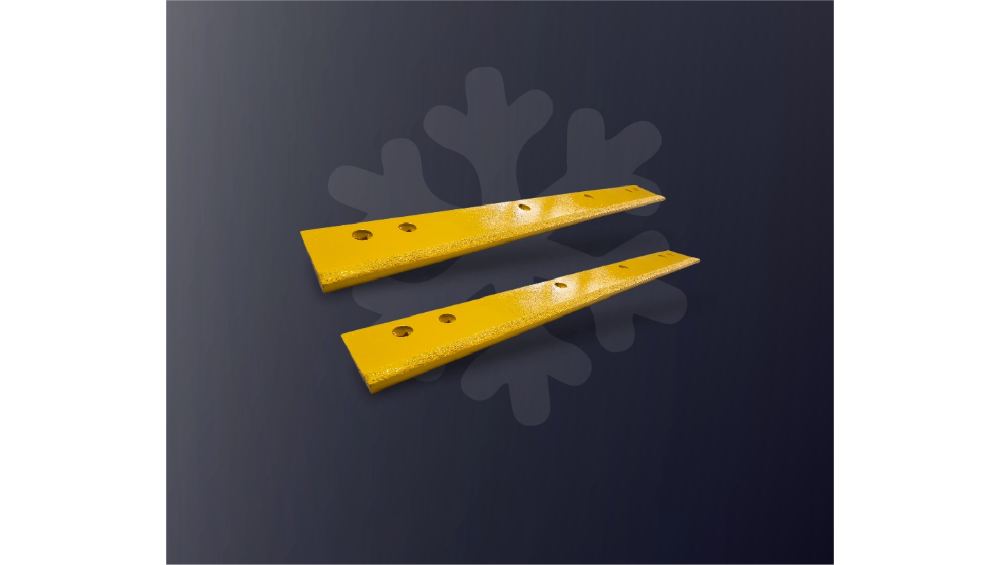
A JOMA-style blade fails in sections, not all at once: one rubber-encased segment loses its carbide, another splits at the bushing, and the fleet is suddenly buying replacements mid-season from whoever answers the phone first. The mistake is ordering by name. “JOMA-style” describes a family of segmented, rubber-encased cutting edges, and compatibility is decided by three measurements, not by the brand label. This guide covers what to match, when to replace segments versus the whole assembly, and how to order replacements that fit the first time.
What “JOMA-Style” Means and Why Compatibility Is Not Universal
A JOMA-style blade is a segmented cutting-edge system: steel carriers, tungsten carbide inserts, and a rubber shell that lets each segment flex independently over uneven pavement. Segments are mounted with specific hardware and spacing, and the rubber is molded to a specific steel profile — so a segment from a different supplier can look identical and still fail to mount, seat, or flex correctly. Compatibility is a measurement problem, not a branding problem.
The Three Fit Points That Decide Whether a Segment Works
Before ordering replacements, confirm three things against the segment currently on the blade:
| Fit point | What to check | Why it matters |
|---|---|---|
| Mounting geometry | Hole diameter, spacing, counterbore, and hardware type | A mismatched hole pattern concentrates stress and shears bolts |
| Segment profile | Length, steel carrier thickness, and rubber encasement depth | Wrong profile changes how the segment seats and flexes |
| Carbide configuration | Insert shape, density, and grade | Affects cut quality, wear life, and impact resistance |
Photograph the old segment with a tape measure across the holes, and record the blade model and plow brand. A manufacturer can then match the drawing instead of guessing.
When to Replace Segments vs the Whole Assembly
| Condition | Replace segment | Replace assembly |
|---|---|---|
| One insert chipped out | Yes, if mounting is intact | No |
| Rubber delaminated from one segment | Yes | No |
| Multiple adjacent segments failing | Consider both | Yes, if the carrier is distorted |
| Steel carrier bent or corroded | No | Yes |
| Bolt holes elongated | No | Yes — and check the blade mount |
Replacing one segment on a blade whose carrier is bent is throwing money at a structural problem. Conversely, replacing a full assembly because one insert popped is wasteful. The condition of the steel carrier decides which way you go.
Why Aftermarket JOMA-Style Parts Need a Drawing, Not a Name
JOMA is a registered brand, and “JOMA-style” is the honest way to describe compatible aftermarket systems. SENTHAI manufactures JOMA-style segments and replacement edges at its factory in Rayong, Thailand, and matches them to customer drawings, samples, or the blade model. There is no such thing as a universal JOMA-style segment; every order should be traceable to a specific measurement set.
The Failure Modes That Send Segments to the Scrap Pile
Three failure modes account for most JOMA-style segment replacement:
Rubber delamination. The rubber shell separates from the steel carrier, usually from sustained heat, UV exposure in storage, or repeated flexing beyond the compound’s range. Inspect stored blades and avoid prolonged direct sun.
Insert loss. A carbide insert pops out when the segment runs at extreme angles or excessive down-pressure. Retention quality matters, but so does setup — check both before blaming the part.
Bushing and pin wear. The pivot points between segments wear, creating play that accelerates everything else. If the bushing is loose, replacing only the cutting edge leaves the problem in place.
Segment Inspection Checklist
When a segment comes off a blade, run five checks before deciding what to order:
| Check | What to look for | Decision |
|---|---|---|
| Carbide retention | Inserts seated, no cracks around the seat | Missing or loose inserts → replace segment |
| Rubber condition | Delamination, cracking, heat damage | Rubber failing → replace segment |
| Bushing play | Excessive movement at the pivot | Play → replace bushing with the segment |
| Carrier straightness | Bends or distortion along the steel | Distortion → replace the assembly |
| Bolt-hole ovality | Holes elongated or damaged | Ovality → replace assembly and check the mount |
The checklist separates a single worn segment from a blade that needs structural attention. It is also the fastest way to stop replacing parts in a pattern without ever fixing the cause.
How to Order Replacements That Fit the First Time
Before contacting a supplier, assemble: the blade model, photos with measurements, the quantity, and the season timeline. Confirm the segment drawing back before production. The installation guide in this series covers torque and hardware verification.
FAQ
How do I identify a worn bushing before it damages adjacent segments?
Check the pivot points for play with the blade off the truck: a worn bushing allows lateral movement and makes the segment rock under load. Loose pivot play accelerates rubber wear and bolt loosening on neighboring segments, so replace the bushing before it becomes a blade-wide problem.
How long do JOMA-style segments last before replacement?
There is no single figure — surface, impact exposure, and setup decide it. Track segment life per route and replace on condition: when the carbide is worn through, inserts are missing, or the rubber is failing.
Does replacing one segment affect the blade’s performance?
A single new segment among worn ones will carry more load and wear faster until the neighbors catch up. For high-utilization blades, replacing in pairs or full assemblies keeps performance even.
Related
- JOMA-Style Blade — the segmented rubber-encased product family
- JOMA-Style Snow Plow Blade Compatibility Guide — fitment guidance for OEM projects
- How to Install a Snow Plow Cutting Edge — torque and hardware verification
- Snow Plow Edge Protectors — protect the moldboard behind the segments
Sources
Related articles
 Best Snow Plow Blade Family for Your Fleet: Top 5 ScenariosKnowledge
 Top 10 Snow Plow Blade Types for Winter Fleets (Ranked by Duty Fit)KnowledgeTop 5 Best Carbide Blade Configurations for Highway PlowingKnowledge
 Best Snow Plow Blade Materials Ranked: Steel vs Carbide vs Cladding vs Rubber-CarbideKnowledge