




Isolated Carbide Edges Best for Cracked Asphalt Roads
Yes — isolated carbide edges (I.C.E. blades) are the best choice for cracked asphalt roads because discrete carbide inserts act as individual shock absorbers, containing impact damage locally instead of letting cracks propagate across…
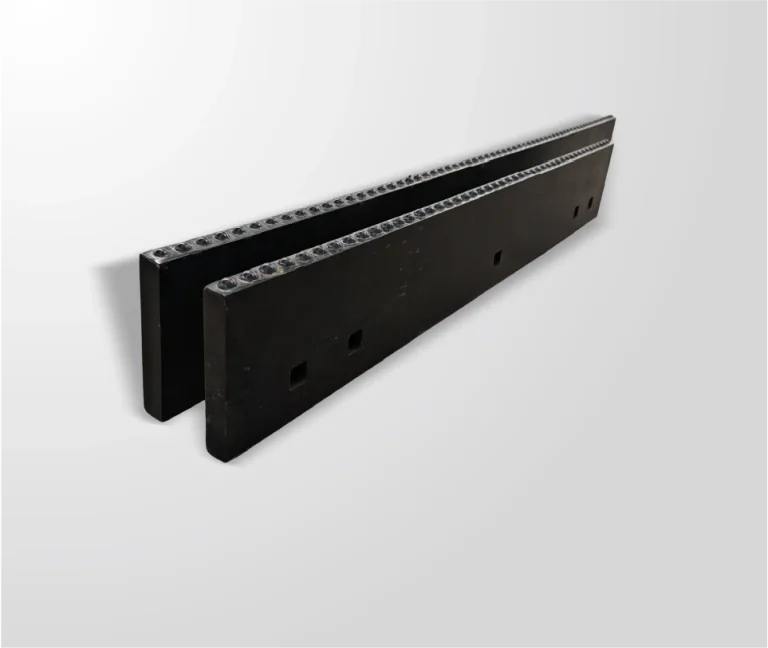
Yes — isolated carbide edges (I.C.E. blades) are the best choice for cracked asphalt roads because discrete carbide inserts act as individual shock absorbers, containing impact damage locally instead of letting cracks propagate across a continuous edge. Over 40% of North American asphalt roads show significant cracking, and continuous carbide edges often shatter on impact with potholes, manhole covers, and expansion joints.
(Last modified date: September 2, 2026)
Quick definition: Aging asphalt pavements dominate North American roads, with over 40% showing significant cracking according to recent federal highway data.
Key Takeaways
- Cracked asphalt and freeze-thaw damage punish continuous edges; isolated inserts contain the damage locally.
- I.C.E. blades flex between inserts, protecting both the blade and the plow assembly.
- Rubber or composite backing damps vibration from uneven pavement.
- Segmented inserts also reduce replacement cost — one damaged segment, not the whole bar.
Infrastructure Reality in North America
Aging asphalt pavements dominate North American roads, with over 40% showing significant cracking according to recent federal highway data. Freeze-thaw damage creates deep fissures around sewer covers, expansion joints, and utility cuts, turning routine plowing into a high-risk activity for standard blades. Embedded gravel, rumble strips, and irregular textures accelerate wear. Traditional continuous carbide edges often shatter on impact; isolated carbide edges address this by design with shock-absorbing resilience tailored for uneven, cracked asphalt. See the isolated carbide-edged packed ice kit.
The Impact Problem Exposed
When a blade hits a crack or joint, the sudden force generates shock waves that propagate laterally through continuous carbide edges, causing entire sections to snap off. That compromises cutting ability and risks damage to the vehicle frame. Standard tungsten carbide blades are hard but lack flexibility, turning minor impacts into catastrophic failures on fractured surfaces. Vibrations from potholes and raised edges amplify stress on the blade base. Without isolation, these incidents shorten blade life and inflate maintenance budgets. See how carbide blades revolutionize ice removal for the counterpoint on smooth roads.
I.C.E. Blades Solve the Problem
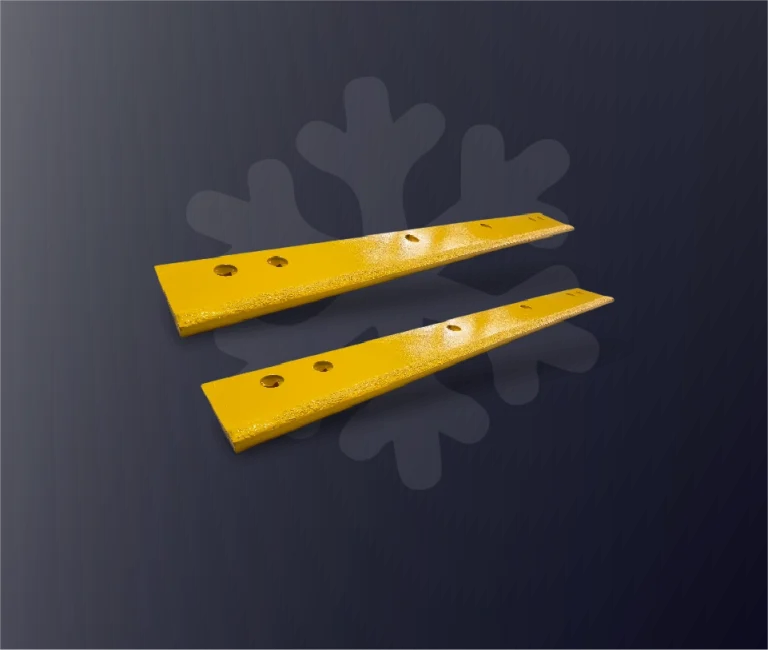
I.C.E. blades feature discrete tungsten carbide inserts independently anchored to a tough steel base, creating natural shock-absorbing zones. Each insert contains impact damage locally and prevents cracks from spreading across the full blade. The flexible gaps between inserts flex under load, protecting both the blade and plow assembly. A resilient rubber or composite backing dampens vibrations from uneven pavement, reducing stress on the vehicle mount. The engineering is explained further in how isolated inserts stop lateral cracks before they start.
Longevity on Harsh Roads
On cracked asphalt, I.C.E. blades typically outlast continuous edges because failures stay localized. Instead of replacing a full bar after one bad impact, crews replace a single segment. Municipalities running I.C.E. blades report fewer mid-storm changeouts and lower cost per mile on damaged pavement. See also top 5 reasons blades go dull and how carbide solves it.
Market Trends Driving Adoption
As road condition data improves, agencies are matching blade design to pavement state. Cracked and patched roads push fleets toward segmented and isolated insert designs, while smooth highways favor continuous edges. The result is a two-tier blade strategy rather than a one-size-fits-all bar. See carbide, JOMA, and packed ice solutions for Trois-Rivières for a regional example.
Competitor Comparison Matrix
| Blade Design | Impact Tolerance | Failure Mode | Repair Cost |
|---|---|---|---|
| Continuous carbide edge | Low on rough roads | Full-section shatter | Full bar |
| Segmented steel with inserts | Moderate | Segment damage | Segment only |
| I.C.E. isolated inserts | High | Localized insert damage | Single insert/segment |
Core Technology Breakdown
The key is insert anchoring: each insert is brazed or mechanically retained so that impact energy dissipates at the joint rather than traveling along the edge. Rubber or composite layers add damping, and the steel base maintains plow-down rigidity. Ultrasonic NDT can verify edge integrity — see how ultrasonic NDT finds cracks in carbide.
Real User Cases and ROI
Fleets on cracked municipal routes report fewer storm-time failures and lower annual edge spend after switching to I.C.E. blades. The localized failure design also cuts labor: one damaged insert is replaced in minutes versus a full-bar changeout in a storm.
FAQs
Why do continuous carbide edges shatter on cracked asphalt?
Impact shock waves travel laterally through the continuous edge; without isolation, a single hit can crack a whole section.
Are I.C.E. blades as durable as continuous edges on smooth roads?
Yes, on normal plowing duty they deliver comparable wear life, and they add impact tolerance where pavement is damaged.
How much does a damaged segment cost to replace?
Far less than a full bar — typically just the insert or segment plus labor, versus full-bar replacement.
Do I.C.E. blades work on highway plows?
Yes, they are used on municipal, highway, and commercial plows, especially where freeze-thaw has damaged the surface.
Related Articles
- Isolated Carbide Inserts: Stopping Lateral Cracks
- Ultrasonic NDT for Carbide Cracks
- Carbide Blades and Ice Removal
- Carbide, JOMA, and Packed Ice Solutions for Trois-Rivières
Official Resources
- SENTHAI — Packed Ice Carbide Kit (I.C.E.)
- SENTHAI — Carbide Snow Plow Blades
- SENTHAI — Contact for Road-Condition Matching
References
- Federal highway pavement condition data, 2025–2026.
- SENTHAI field data on I.C.E. blade performance on cracked asphalt routes.
Related articles
 How to Select a Rear Snow Plow Blade for Professional Snow RemovalHot Products
 What John Deere Snow Plow Blade Sizes Fit 1-5 Series Tractors?Hot Products
 How to Set Back Blade Snow Plow Height on Gravel Roads?Hot Products
 How Does HRA Hardness in Tungsten Carbide Snow Plow Blades Handle High-Speed Impacts?Hot Products