




Carbide Utility Blades vs Steel: The Real Cost, Durability, and Performance Breakdown for Factories
Carbide utility blades beat steel on total factory cost even though steel wins on purchase price: they last roughly 5–10 times longer, and the cost-per-cut is less than half that of carbon steel once…
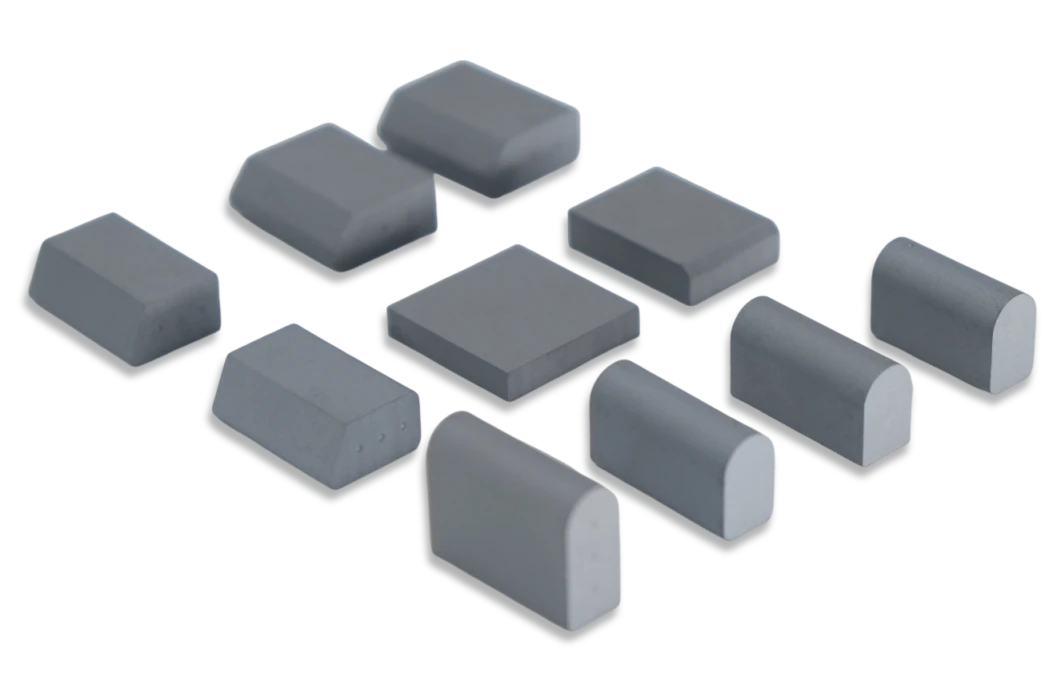
Carbide utility blades beat steel on total factory cost even though steel wins on purchase price: they last roughly 5–10 times longer, and the cost-per-cut is less than half that of carbon steel once downtime, labor, scrap, and safety are included. In plants that cut abrasive materials such as fiberglass, composites, rubber, laminates, insulation, or coated packaging, carbide edges stay sharp through entire shifts, which keeps cutting force low, quality consistent, and production lines running.
(Last modified date: September 7, 2026)
Quick definition: Abrasive materials are the true stress test for any industrial cutting tool.
Key Takeaways
- Unit price is the wrong comparison: a carbide blade that costs 4× more but delivers 10,000 cuts vs 1,000 for steel produces a cost-per-cut below half of steel’s.
- Carbide resists micro-chipping, rounding, and burr formation on abrasive materials, so cut quality stays stable through the shift instead of degrading.
- Every blade change carries hidden cost — lost production, labor, lockout-tagout, and setup variation — which carbide reduces by extending change intervals.
- See what carbide utility knife blades are and why they matter for manufacturers for the product-level background.
The Durability Gap: Why Carbide Lasts Up to 10× Longer
Carbide utility blades are made from a composite of hard carbide particles bonded with a metallic binder, which delivers extremely high hardness and wear resistance compared with standard carbon steel or alloy steel blades. This hardness translates directly into cutting-edge retention, especially when cutting abrasive materials like fiberglass, composites, laminates, rubber, corrugated board, insulation, or coated packaging. In many industrial tests and real plant environments, carbide edges last roughly 5 to 10 times longer than conventional steel utility blades under comparable conditions. That durability gap becomes even more pronounced in high-speed, high-volume manufacturing where abrasive dust and fillers rapidly erode a steel edge.
How Carbide Handles Abrasive Materials in Factory Environments
Abrasive materials are the true stress test for any industrial cutting tool. Filled plastics, mineral-loaded rubber, fiber-reinforced composites, and coated papers act like sandpaper against the cutting edge. A standard carbon steel blade quickly develops micro-chipping, rounding, and burrs that dull the edge and increase cutting force. Carbide utility blades maintain sharpness much longer because the hard carbide phase resists micro-abrasion and deformation. This means more consistent cutting force, cleaner cuts, and reduced variation in cut quality as the shift progresses — a direct driver of yield, rework, and uptime for factories that cut abrasive materials all day.
Cost-per-Cut: The Metric That Actually Matters
The biggest mistake in comparing carbide utility blades vs steel is focusing only on unit price instead of cost-per-cut. A simple model shows the logic: if a steel blade costs one unit and makes 1,000 acceptable cuts before change-out, its cost-per-cut is 0.001 units. If a carbide blade costs four units but delivers 10,000 cuts, its cost-per-cut is 0.0004 units — less than half that of steel. Scaled over millions of cuts per month, the total savings in cutting tool cost and indirect cost become substantial.
| Metric | Steel utility blade | Carbide utility blade |
|---|---|---|
| Relative purchase price | 1× | 3–4× |
| Cuts before change-out | ~1,000 | ~10,000 |
| Relative cost per cut | 0.001 | 0.0004 |
| Edge retention on abrasive materials | Rapid dulling, burrs | Stable through the shift |
| Change frequency | High | Low |
Downtime and Labor: The Hidden Cost Drivers
Every blade change in a production environment introduces downtime, whether it is a quick manual swap on a hand-held utility knife or a scheduled stop on an automated cutting line. In automated packing, converting, slitting, and trimming applications, each change often requires lockout-tagout, machine stop, guard removal, and verification — several minutes of lost production plus ramp-up losses. With steel blades, frequent changes push downtime higher and increase the number of interventions per shift. Carbide utility blades reduce the number of changes because they run longer between replacements, which is why they are often chosen for multi-shift plants, high-speed converting lines, and operations with high labor costs. Fewer blade changes also reduce the chance of improper installation or unsafe handling.
Real Factory Case and ROI Calculation
Consider a plant running two shifts per day on a converting line cutting abrasive laminated packaging materials. With steel utility blades, operators change blades every hour to maintain cut quality — around sixteen changes per day per line. If each change consumes five minutes of downtime, that is eighty minutes of lost production per line per day. Switching to carbide utility blades that last an entire shift can reduce blade changes to two per day, cutting downtime to ten minutes. The regained production time, reduced scrap from dull blades, and lower labor time for change-outs deliver a clear return on investment, with a payback period measured in weeks or months rather than years.
Safety, Ergonomics, and Automation
Using dull steel blades in industrial settings drives operators to apply more force, twist the blade, or use unsafe angles, increasing the risk of repetitive strain injuries, slips, and accidental cuts. Carbide blades stay sharp longer, so operators use lighter, more controlled motions with less fatigue. On mechanized cutters, stable sharpness reduces manual rework and post-processing that expose workers to sharp edges. For automated and robotic cutting systems, carbide brings the consistency needed to set preventive maintenance intervals and avoid mid-run failures, aligning with Industry 4.0 data-driven maintenance goals. See also how to upgrade John Deere snow plow blades, how to control blade wear rate, and maximizing efficiency with trapezoid tungsten carbide inserts for related wear-part guidance.
Core Materials Technology and Market Trends
At the materials level, carbon steel utility blades rely on martensitic structures that soften with heat and wear rapidly under abrasion. Carbide blades use a matrix of hard carbide grains, often tungsten carbide, embedded in a binder that provides toughness — very high hardness and compression strength, along with good heat resistance. The result is an edge that resists deformation, chipping, and rounding even in tough materials and at elevated temperatures. In industrial markets, rising labor costs, higher automation, and lean manufacturing strategies are shifting buyers from cheap steel toward long-lasting carbide utility blades, with cost-per-cut, cost-per-unit, and maintenance-induced downtime tracked as continuous-improvement metrics.
SENTHAI Carbide Tool Co., Ltd. is a US-invested manufacturer based in Rayong, Thailand, specializing in carbide wear parts for snow plow blades, road maintenance tools, and industrial blades. With over two decades of experience in carbide production, SENTHAI combines automated production lines, strict quality assurance, and ISO-certified processes to deliver high-performance carbide solutions trusted by OEMs and industrial users across more than 80 global partnerships.
FAQs
Why do carbide utility blades cost more than steel blades?
Carbide blades cost more because the material and manufacturing process — hard tungsten carbide grains bonded with a metallic binder, precision-ground into a blade — are more expensive than carbon steel. The higher price is offset by 5–10× longer life and a lower cost-per-cut in production.
When does steel make more sense than carbide?
Steel still makes sense for low-duty, low-abrasion, low-budget applications where uptime and cut quality are less critical, and where blade life is measured in shifts rather than minutes or hours.
How do I calculate cost-per-cut for my plant?
Divide total blade cost (purchase price plus change-out labor and downtime) by the number of acceptable cuts delivered. Compare that number for steel and carbide under your real materials and duty cycle.
Are carbide blades suitable for automated cutting lines?
Yes. Carbide’s predictable, long life lets automated lines set preventive maintenance intervals and avoid mid-run failures, which is a major advantage in robotic and high-speed converting systems.
Does carbide reduce waste and support sustainability goals?
Yes. Fewer blades per year means less packaging, transport, and disposal, and less scrap from dull-blade cuts improves overall resource efficiency.
Related Articles
- What Are Carbide Utility Knife Blades and Why Are They Essential for Manufacturers?
- How to Upgrade John Deere Snow Plow Blade for Ice and Asphalt Durability?
- How Can You Accurately Control Snow Plow Blade Wear Rate to Reduce Maintenance Costs?
- Maximizing Plowing Efficiency with Trapezoid Tungsten Carbide Inserts
Official Resources
References
Related articles
 How to Select a Rear Snow Plow Blade for Professional Snow RemovalHot Products
 What John Deere Snow Plow Blade Sizes Fit 1-5 Series Tractors?Hot Products
 How to Set Back Blade Snow Plow Height on Gravel Roads?Hot Products
 How Does HRA Hardness in Tungsten Carbide Snow Plow Blades Handle High-Speed Impacts?Hot Products