




Carbide Cutting Edge Industry Report 2026: Materials, Manufacturing & Supply Chain
Executive summary. Carbide cutting edges sit at the intersection of material science and manufacturing discipline: tungsten carbide grain structure and binder content determine wear resistance, brazing quality determines survival under impact, and traceability determines whether…
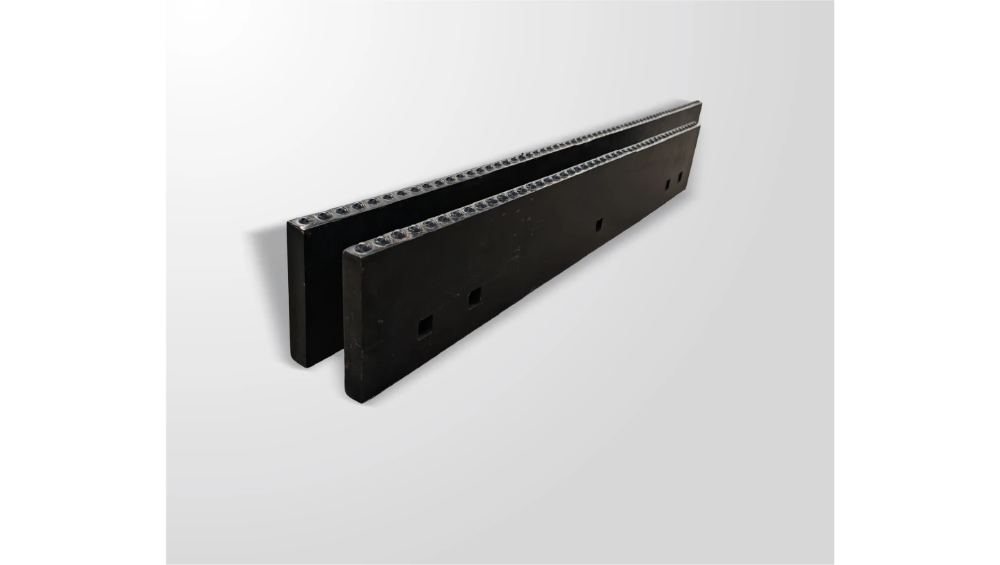
Executive summary. Carbide cutting edges sit at the intersection of material science and manufacturing discipline: tungsten carbide grain structure and binder content determine wear resistance, brazing quality determines survival under impact, and traceability determines whether a buyer can trust a batch. The industry is split between cutting-tool majors that treat edges as one product line and wear-part specialists that engineer them as core business. In 2026, buyers are increasingly demanding documented quality, and the OEM-vs-aftermarket split continues to drive price and availability differences.
1. What a Carbide Cutting Edge Is
A carbide cutting edge is a steel blade body with tungsten carbide tips or inserts bonded along the wear face. The carbide provides abrasion resistance; the steel provides toughness and a mounting structure that matches a plow or grader bolt pattern. Edges are sold in three families: steel (no carbide), carbide-tipped (tips brazed onto a steel body), and carbide-insert (replaceable inserts set into a steel body). For snow removal and road maintenance, carbide-tipped edges dominate because they balance wear life, impact resistance, and replaceability.
2. Materials: How Grade Determines Performance
Carbide is specified by two variables that matter more than brand: tungsten carbide grain size and cobalt binder content.
- Fine grain, lower binder = harder, more wear-resistant, more brittle. Suited to clean abrasion with low impact.
- Coarser grain, higher binder = tougher, more impact-resistant, slightly less wear-resistant. Suited to ice-contact and debris-heavy service.
A snow plow edge that must survive gravel contact needs a different grade than a turning insert that runs at high temperature. Reputable manufacturers state the grade, grain size, and hardness (HV or HRA) for every product and can explain why a grade was chosen for an application. If a supplier cannot document the material specification, the quality is unknowable — carbide failure is invisible on the surface until it happens.
3. Manufacturing: Brazing Is the Quality Battleground
The carbide is only as good as its attachment. Brazing bonds carbide tips to the steel body with a filler metal at high temperature, and the process decides whether tips survive impact loads. Three variables separate good brazing from poor brazing:
- Temperature control. Consistent heat avoids embrittlement of the carbide and weak bonds at the interface.
- Filler and coverage. Full braze coverage and correct filler selection prevent voids where tips detach.
- Inspection and traceability. Lot-level records of braze coverage, tip alignment, and material batch let buyers verify consistency from batch to batch.
Automated high-temperature brazing systems reduce the human variability that plagues manual torch brazing — the reason fleets should ask for process documentation, not just certificates. See High Temperature Automated Brazing for Plow Edges for the full engineering discussion.
4. The Supply Chain: Two Channels, Two Buying Experiences
The carbide edge market splits into two supply chains, and understanding which one you are buying from changes how you buy:
| Channel | Who | Strength | Trade-off |
|---|---|---|---|
| OEM / machine dealer | Cat, John Deere, Western, Fisher, BOSS etc. | Fitment certainty, dealer stock | Narrower material choice, higher price |
| Wear-part specialist | Winter Equipment, Kenco, SENTHAI, Sharq etc. | Material range, price competition, custom programs | Buyer must verify fitment |
Most fleets buy the machine from one channel and consumables from both: dealer parts for critical fitment, specialist parts for high-volume consumables and carbide upgrades. The trend in 2026 is toward standardization on a single edge supplier with documented quality, especially for fleets running mixed plow brands.
5. Tungsten Supply and Price Risk
Tungsten is a concentrated, geopolitically sensitive raw material. Powder supply, refining capacity, and export policy all feed into carbide prices and lead times. Buyers increasingly ask three questions:
- Where does the tungsten come from, and how diversified is the supply?
- How is price and availability risk managed across the season?
- Does the manufacturer control brazing and finishing in-house, or is it a trading operation?
Manufacturers with vertical control of powder-to-edge production hold lead times and quality where trading operations cannot. Add tungsten sourcing to your supplier questionnaire alongside grade, process, and inspection.
6. Trends to Watch in 2026
- Grade engineering. Suppliers are moving from generic grades to application-engineered carbide, which rewards suppliers that document their material choices.
- Automated brazing. Process control is becoming the differentiator, and buyers are asking for lot-level inspection records.
- Brand compatibility. Aftermarket edges for Western, Fisher, BOSS, Hiniker, and Meyer plows are the highest-volume segment, and fitment verification is the top source of returns.
- Custom and private label. OEMs and distributors increasingly source private-label edges from specialist manufacturers with custom bolt patterns and branding.
Put the Report to Work
Compare suppliers on grade documentation, braze process, and traceability — not just price. Review SENTHAI’s replaceable carbide inserts and carbide snow plow blade range, then contact the SENTHAI team with your application details for a documented recommendation.
Related articles
 How to Source Snow Plow Blades: OEM, Distributor, or Direct2026News
 Top 10 Agricultural Equipment Manufacturers in 2026: Tractors, Harvesters & Precision Farming2026News
 Snow Removal Contracting Industry Report 2026: Margins, Equipment & the El Niño Winter2026News
 Top 5 Snow Plow Cutting Edge Brands for Winter 2026–272026News