Carbide Corrosion Resistance: Complete Guide to Materials, Grades, and Real-World Performance
Carbide corrosion resistance describes how well cemented and ceramic carbides maintain integrity, hardness, and dimensional stability in corrosive environments — and in cemented carbides, corrosion usually starts in the metallic binder, not the hard…

Carbide corrosion resistance describes how well cemented and ceramic carbides maintain integrity, hardness, and dimensional stability in corrosive environments — and in cemented carbides, corrosion usually starts in the metallic binder, not the hard carbide grains. Binder choice, pH, chlorides, and temperature decide real-world service life.
(Last modified date: August 31, 2026)
Key Takeaways
- Corrosion typically initiates in the binder phase, leaving a brittle porous carbide skeleton.
- WC–Co is vulnerable in strong acids; WC–Ni and WC–NiMo improve resistance in low pH and chlorides.
- Monolithic carbides like silicon carbide rely on protective oxide layers.
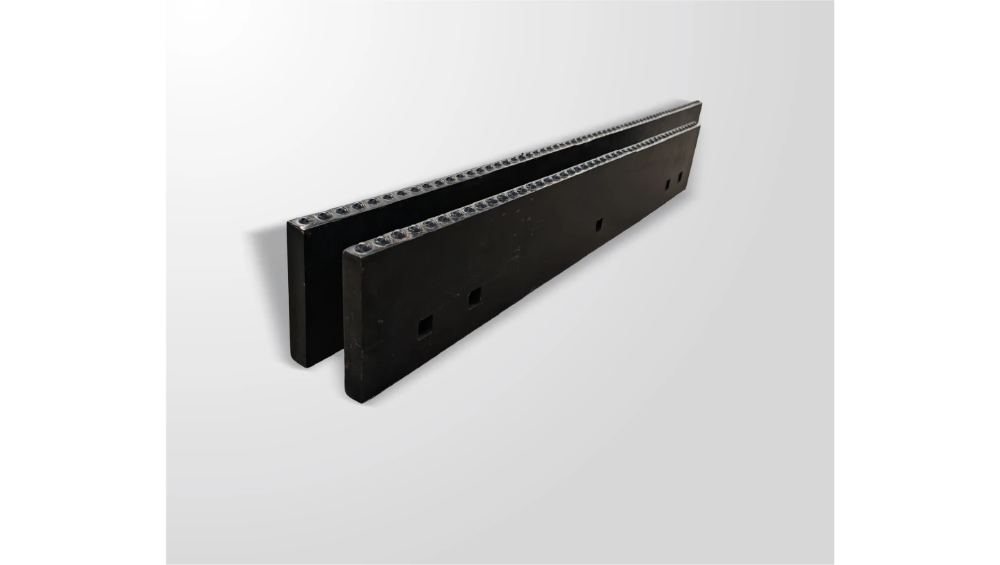
- Snow plow blades face salt and chemical exposure — binder engineering matters.
What Carbide Corrosion Resistance Really Means
In industrial practice, carbide corrosion resistance describes how well cemented carbides and ceramic carbides maintain integrity, hardness, and dimensional stability when exposed to corrosive environments over time. Cemented carbides — tungsten carbide with cobalt or nickel binders — are composites where hard carbide grains are held together by a metallic matrix. Corrosion often initiates in the binder: when it selectively dissolves, the surface becomes depleted of metal, leaving a porous, brittle carbide skeleton. See snow plow carbide blade durability and market evolution.
Types of Carbide and Their Corrosion Behavior
| Carbide System | Corrosion Behavior | Best For |
|---|---|---|
| WC–Co | Vulnerable in strong acids | General wear, toughness |
| WC–Ni / WC–NiMo | Better in low pH and chlorides | Downhole tools, aggressive fluids |
| TiC in Ni binders | Improved chemical resistance | Corrosion-wear environments |
| Silicon carbide | Protective oxide layer | Seals, aggressive media |
Mechanisms of Corrosion in Cemented Carbides
Selective binder dissolution, galvanic coupling between carbide and binder, and chloride attack are the main mechanisms. Once the binder is depleted, the carbide skeleton is more brittle and prone to mechanical failure under wear and impact.
Carbide Corrosion Resistance in Snow Plow Blades and Road Tools
Snow plow blades face salt, brine, and de-icing chemicals. Binder engineering and protective layers keep inserts bonded and edges sharp through corrosive winter service. See I.C.E. winter operations guide.
Practical Strategies to Improve Carbide Corrosion Resistance
- Select nickel or NiMo binders for low-pH and chloride environments.
- Add protective coatings where practical.
- Control porosity and surface finish to reduce attack sites.
- Match grade to the media and temperature.
See how to source reliable snow plow parts in North America.
Maintenance, Storage, and Handling for Corrosion Control
Clean blades after salt exposure, store dry, and apply corrosion inhibitors off-season to protect steel carriers and braze joints.
Engineering Selection Guide
- Define media: acids, bases, salt, or mixed.
- Define pH, chloride content, and temperature.
- Choose binder system accordingly.
- Verify with corrosion testing data.
Frequently Asked Questions
Where does corrosion start in cemented carbide?
Usually in the metallic binder, which dissolves selectively and leaves a porous, brittle carbide skeleton.
Is WC–Co corrosion resistant?
It resists many environments but is vulnerable in strong acids; nickel binders improve low-pH and chloride resistance.
Does corrosion matter for snow plow blades?
Yes — salt and de-icing chemicals attack binders and braze joints; grade and coating selection extend life.
Can I improve corrosion resistance without changing grade?
Yes — coatings, surface finishing, and proper storage reduce attack sites and extend service life.
Related Articles
- Carbide Blade Durability and Market Evolution
- Sourcing Reliable Snow Plow Parts
- I.C.E. Winter Operations Guide
Official Resources
- SENTHAI — Carbide Snow Plow Blades
- SENTHAI — Replaceable Carbide Inserts
- SENTHAI — Contact for Corrosion-Resistant Grades
References
- Corrosion behavior literature for WC–Co, WC–Ni, and silicon carbide systems.
- SENTHAI material selection documentation, 2026.